
ICE Institute Microcredentials:
Guidelines for Course Proposal Submission
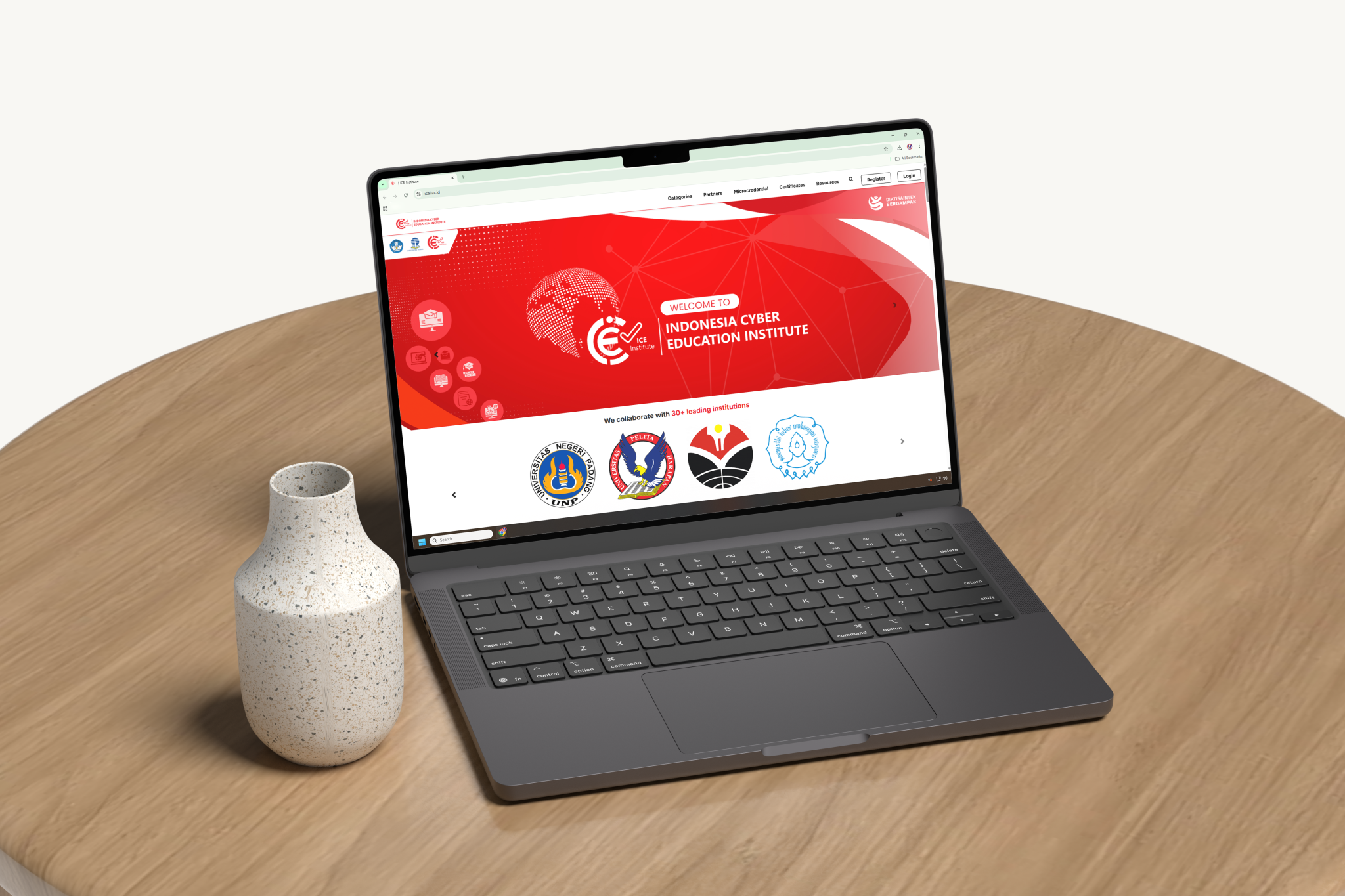
ICE Institute Microcredentials are specialized online certification programs managed by the Indonesia Cyber Education Institute (ICE Institute). The program offers flexible and fast learning opportunities focused on practical skills required by industry, supported by collaborations with various leading universities.
The collaboration between ICE Institute and Universitas Pelita Harapan (UPH), which began in 2021, focuses on expanding access to online micro-credential programs. Through this partnership, UPH participates in the development and delivery of specialized online courses that provide students and staff with practical, industry-relevant skills. UPH also supports initiatives such as workshops, training sessions, and integration of micro-credentials into academic programs, helping learners enhance their employability and digital competencies. This collaboration emphasizes flexible, fast, and targeted learning while leveraging UPH’s educational expertise and ICE Institute’s platform for digital skill certification.
Why ICE Institute Microcredentials?
ICE Institute Microcredentials enable your course to reach learners across institutions, including public audiences and working professionals. This wider reach allows your expertise to create greater academic and professional impact.
Developing a microcredential also strengthens your academic portfolio by documenting your engagement in digital, innovative, and outcome based teaching practices. It demonstrates adaptability to contemporary learning models and supports professional recognition.
With a self paced format, learners can access the course flexibly, making it especially suitable for working individuals and lifelong learners. In addition, the course may be offered as a paid microcredential with pricing and revenue sharing arrangements in accordance with applicable terms, creating added value for both the institution and the course developer.
Requirements for Submitting a Microcredential to ICE Institute
The following documents and materials must be prepared:
- Course outline and concept map (a template will be provided).
- Learning materials, including readings, videos, and other supporting resources.
- Forum discussion questions.
- Question bank for Quizzes, Midterm (UTS), and Final Exam (UAS) in the form of objective tests (required for self-paced delivery).
Additional Microcredential Topic Ideas Relevant to Current Needs
Examples of topics that may be considered based on cross-disciplinary demand and current workforce trends:
A. Data, AI, and Automation
- Generative AI for teaching and academic writing, covering ethical considerations, AI literacy, prompt design, academic integrity, and responsible integration of AI tools in learning environments.
- Data analytics for non IT participants, introducing practical data processing, visualization techniques, interpretation of insights, and the development of simple dashboards to support decision making.
- Work automation using digital tools, focusing on workflow design, digital documentation systems, reporting automation, and productivity enhancement through commonly used platforms.
B. Cybersecurity and Data Governance
- Cybersecurity awareness for institutions and organizations, including common threat types, phishing prevention, password management, and building a culture of digital security.
- Data privacy and basic digital risk management, discussing regulatory principles, personal data protection, risk identification, mitigation strategies, and ethical data handling practices.
C. Business and Industry
- Data driven digital marketing, emphasizing analytics interpretation, campaign optimization, customer behavior insights, performance metrics, and marketing technology tools.
- Fundamentals of product management, covering user needs analysis, problem validation, product roadmap development, prioritization frameworks, and key performance indicators.
- Basic supply chain and logistics analytics, introducing forecasting methods, inventory management principles, demand planning, and data informed operational decisions.
D. Education and Health (High-Demand Specific Areas)
- Digital learning design, including microlearning strategies, outcome alignment, assessment design, evaluation methods, and rubric development for effective learner engagement.
- Basic health informatics, exploring health data systems, digital health records, data ethics, privacy considerations, and the role of information systems in improving healthcare delivery.
Course Format (Optional, to Support Clear Self-Paced Delivery)
The following documents and materials must be prepared:
- Short videos per topic (e.g., 5–10 minutes).
- Readings and supporting resources (articles, modules, reference links).
- Forum discussion questions per module/topic.
- Worksheets/checklists (if relevant).
Assessment (Objective Tests)
Since the course is delivered in a self-paced format, assessments for Quizzes/UTS/UAS use objective tests (fixed correct answers) to enable automated grading. Examples of objective test formats include:
- Multiple choice (single answer/multiple answers).
- True/False.
- Matching.
- Short answer with an answer key (fixed-response short answer).

Microcredential Submission Process
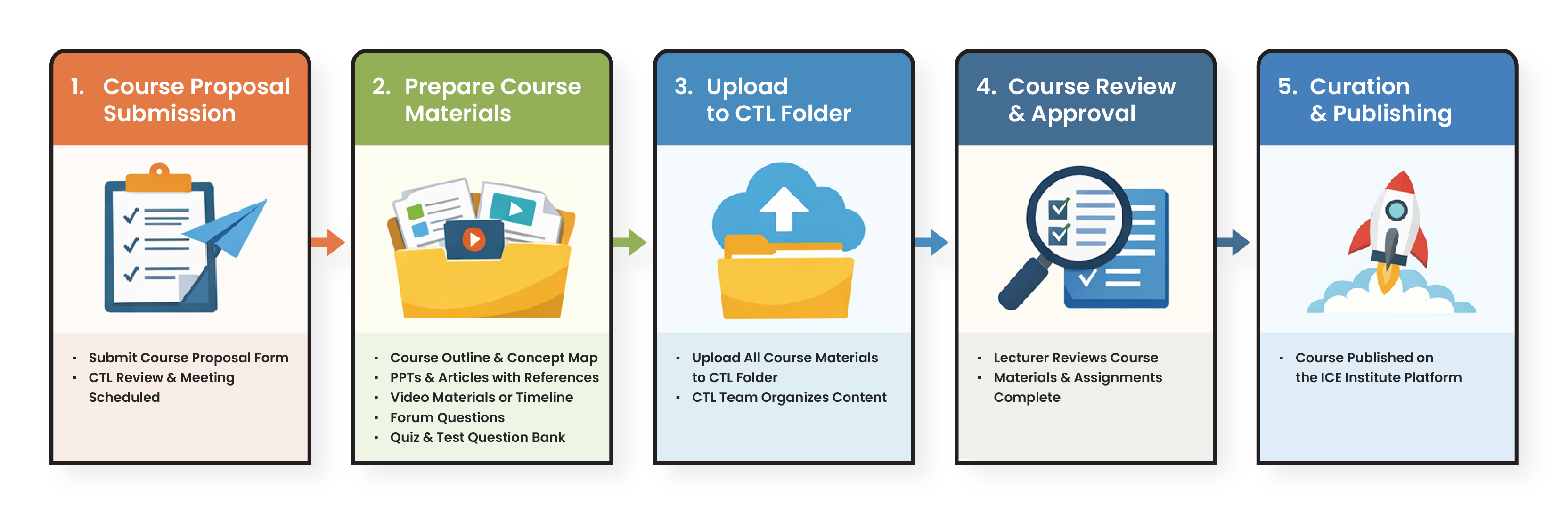
Ready to turn your expertise into a recognized microcredential course? This is your opportunity to expand your impact and share your knowledge with a wider learning community. Follow the process below to guide your course from initial idea to successful publication with clarity and confidence.
- Initial Contact and Proposal Submission
Contact edutech@uph.edu to express your interest and submit your course proposal for initial consideration.
- Proposal Review and Consultation
The CTL team will review your proposal and schedule a meeting if the course is considered viable for submission.
- Course Development Preparation
Prepare the required materials: course outline and concept map, learning materials such as PPT, journals, or articles with proper references, video materials or a video production timeline, forum questions, and an objective test question bank for Quiz, UTS, and UAS.
- Upload and Platform Support
Upload all required items to the folder provided by the CTL team. The team will assist in uploading and organizing the materials on the ICE Institute platform.
- Final Review and Publication
The lecturer conducts a final review once all materials and assignments are complete. CTL Team will curate and publish the course once all requirements are fulfilled.
For technical questions, templates, or the microcredential submission process, please contact: edu.tech@uph.edu